ECMO (Extracorporeal Membrane Oxygenation) is a special machine that helps the heart and lungs when they’re too sick to work on their own. Think of it like a superhero stepping in to do the heart and lungs’ job for a little while. Here’s what you need to know, explained in simple terms:
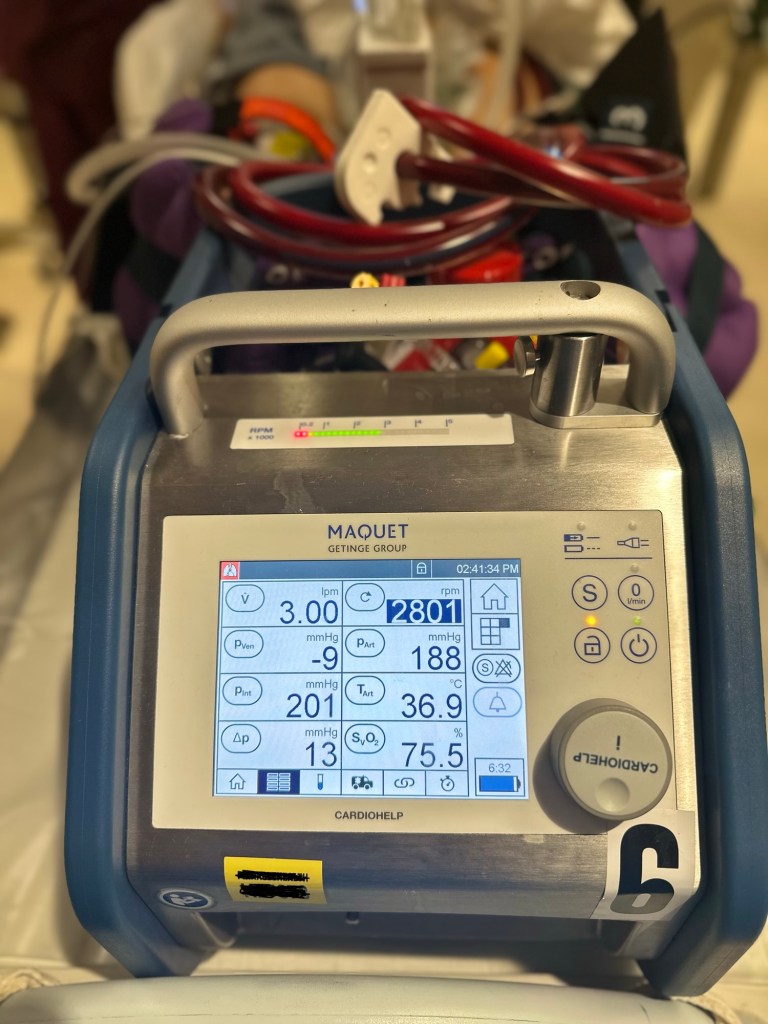
1. What is ECMO?
- What does it do?
ECMO pumps blood out of the body, adds oxygen to it (like lungs do), and removes carbon dioxide (the “bad air” we breathe out). Then it sends the blood back into the body. - Two Types:
- VA ECMO: Helps both the heart and lungs.
- VV ECMO: Helps just the lungs.
2. How ECMO Affects the Blood
Blood Cells Can Get Hurt
- Red Blood Cells: These carry oxygen. The ECMO machine can accidentally damage them, causing anemia (too few red blood cells). Doctors might give a blood transfusion to fix this.
- Platelets: These tiny cells help stop bleeding. ECMO can lower their numbers, making it easier to bleed or bruise.
Blood Clots vs. Bleeding
- Blood Thinners (Medicine): To stop clots from forming in the machine, patients get medicine like heparin.
- Risks:
- Clots can still form and block blood flow (like a traffic jam in the body).
- Bleeding can happen, especially where tubes are placed or inside the body.
The Body’s “Alarm System” (Inflammation)
- What Happens? When blood touches the ECMO machine, the body thinks there’s danger and sounds an alarm. This can cause swelling, fever, or tired organs.
- Germs (Infection): The longer someone is on ECMO, the easier it is for germs to cause infections. Doctors watch closely for this.
3. What Happens While on ECMO?
Common Problems
- Kidneys: Damaged blood cells or clots can hurt the kidneys. If kidneys stop working or don’t work well enough, dialysis (a machine that cleans blood) might be needed.
- Minerals in the Blood: Calcium and potassium levels can get too high or low. Doctors fix this with medicine or special fluids.
- Temperature: The machine can warm or cool the blood. Sometimes cooling helps protect the brain.
Doctors Do Blood Tests Every Day
- Blood Oxygen Levels
- Red blood cells and platelets.
- Blood clotting time.
- Minerals (like calcium and potassium).
- Signs of infection.
4. How You Can Help Your Loved One
Questions to Ask the Doctors/Nurses
- How long will they need ECMO?
- What are signs of bleeding or infection? (Example: New bruises, fever, or red skin near tubes.)
- Will they need blood transfusions or dialysis?
- How are they kept comfortable? (Sedation or pain medicine?)
Supporting Your Loved One
- Stay Calm: Even if they’re asleep, they might hear you. Talk softly, hold their hand, or play their favorite music.
- Watch for Changes: Tell the nurses if you see something new, like confusion, swelling, or bleeding.
- Take Care of YOU: Rest, eat, and ask for help from hospital social workers or counselors.
5. Possible Problems with ECMO
- Bleeding: The most common issue. This could be a nosebleed, blood in urine, or bleeding where the tubes go in.
- Clots: These can block blood flow to the brain, lungs, or the machine itself.
- Organ Damage: Kidneys, liver, or brain might need extra help.
- Infection: Germs can enter through the tubes. Doctors use antibiotics to fight this.
6. Simple Words to Know
- Cannulas: The tubes that connect the body to the ECMO machine.
- Anemia: Not enough red blood cells (causes tiredness or pale skin).
- Blood Thinners: Medicine that stops clots from forming.
- Inflammation: The body’s “alarm system” causing swelling or fever.
7. When ECMO is Turned Off
- Getting Better: If the heart or lungs heal, doctors slowly turn down the ECMO machine to see if the body can take over.
- Next Steps: If organs don’t recover, other options (like a transplant) may be discussed.
Final Tips for Families
- ECMO is a temporary helper—it buys time for the body to heal or for doctors to plan the next step.
- Every patient is different. Some get better quickly; others need more time.
- Trust the doctors and nurses—they’re experts at balancing risks and benefits.
You’re Not Alone!
Ask questions, take notes, and lean on the care team. Your love and support matter more than anything!
🌈 Remember: ECMO is complicated, but you don’t have to understand everything. Focus on being there for your loved one!
 ECMO World
Leave a comment